



Nazar Syvak’s study Politics by Other Memes, published in the Journal of Information Warfare, offers one of the clearest explanations of how Ukraine transformed memes from online entertainment into instruments of modern warfare.
At first glance, it may sound absurd. How could memes—silly pictures, sarcastic captions, and viral jokes—matter in a war between a nuclear power and a smaller democratic state fighting for its survival?
Yet Syvak’s research shows that these seemingly trivial artifacts played a decisive role in shaping international narratives, sustaining public morale, pushing back against Russian propaganda, and keeping Ukraine visible on the global stage long after headlines faded.
The story of Ukrainian memetic warfare is also the story of how digital culture itself has evolved into a strategic domain of conflict.
To understand this transformation, one must first appreciate how deeply digital communication now structures everyday life.
Before smartphones and social media, wars were narrated primarily by journalists, broadcasters, and official statements. Today, almost everyone with an internet connection becomes a potential storyteller.
The information environment—what militaries now formally define as the sum of all people, systems, and platforms that produce or receive information—has expanded to include billions of ordinary users scattered around the world.
Social media is the arena where this information environment is most visible, and where narratives compete for attention.
In this hyperconnected space, memes have become the lingua franca of online expression. Their strength lies in their simplicity.
A meme distills a complex idea into a single image or short phrase, making it immediately graspable even to a casual viewer. It travels quickly, picking up layers of meaning as different communities modify and reinterpret it.
Unlike traditional propaganda, which depends on authority and repetition, memes rely on humor, relatability, and shared cultural understanding. They can be created by anyone, adopted by millions, and modified endlessly to fit new events. They thrive on spontaneity and community involvement rather than top-down direction.
When Russia invaded Ukraine, Ukrainians instinctively turned to this digital vocabulary.
The invasion was chaotic and terrifying, but the country’s online spaces exploded with creativity. Almost overnight, memes became a form of psychological coping, national solidarity, and political communication.
They offered reassurance to those living through bombardment, mocked the invader, and signaled to the world that Ukrainians were neither defeated nor passive. Humor became a defiant gesture—a refusal to succumb to fear.
One of the first viral examples was the now-legendary phrase “Russian warship, go f*** yourself,” uttered by Ukrainian border guards defending Snake Island.
The phrase became a meme within hours, spreading globally as a symbol of Ukrainian resistance. It appeared on posters, T-shirts, and eventually on an official postage stamp issued by Ukraine’s postal service.
A similar burst of online enthusiasm followed videos of farmers towing abandoned Russian tanks with their tractors. These clips became templates for hundreds of memes celebrating Ukrainian ingenuity and mocking Russian incompetence.
The tone was lighthearted, but the underlying message was serious: Ukraine was fighting back with courage and wit, and the world should take notice.
At the same time, Ukrainian meme culture developed a darker, more targeted edge aimed directly at undermining Russian morale and Russian state narratives.
Memes depicting Vladimir Putin at his comically long conference tables, or transforming him into a monkey or clown, were not just jokes—they were tools designed to diminish the aura of power that authoritarian leaders carefully cultivate.
Generals like Gerasimov and Surovikin became fixtures of ridicule for their strategic failures, logistical blunders, and public appearances.
Ordinary Russian soldiers were satirized as poorly equipped, ill-trained, or cowardly, feeding into a narrative of Russian military incompetence that undercut official Kremlin propaganda.
This ridicule served a psychological purpose.
In war, belief matters as much as bullets. Highlighting the adversary’s mistakes and weaknesses can erode confidence among their supporters and cast doubt on official claims of strength or inevitability. In authoritarian systems built on images of control, losing face can be as damaging as losing tanks.
Ukraine’s memetic campaign exploited this vulnerability ruthlessly. Syvak notes that pro-Ukrainian users sometimes coordinated “meme raids” on Russian and pro-Russian Telegram channels, flooding them with mocking images to drown out propaganda and demoralize participants.
What might appear as juvenile trolling from the outside was, in practice, a form of decentralized information warfare.
Western audiences played a critical role as well.
In the war’s early months, international support was essential for Ukraine’s survival. Memes helped translate the Ukrainian experience into terms familiar to global online communities.
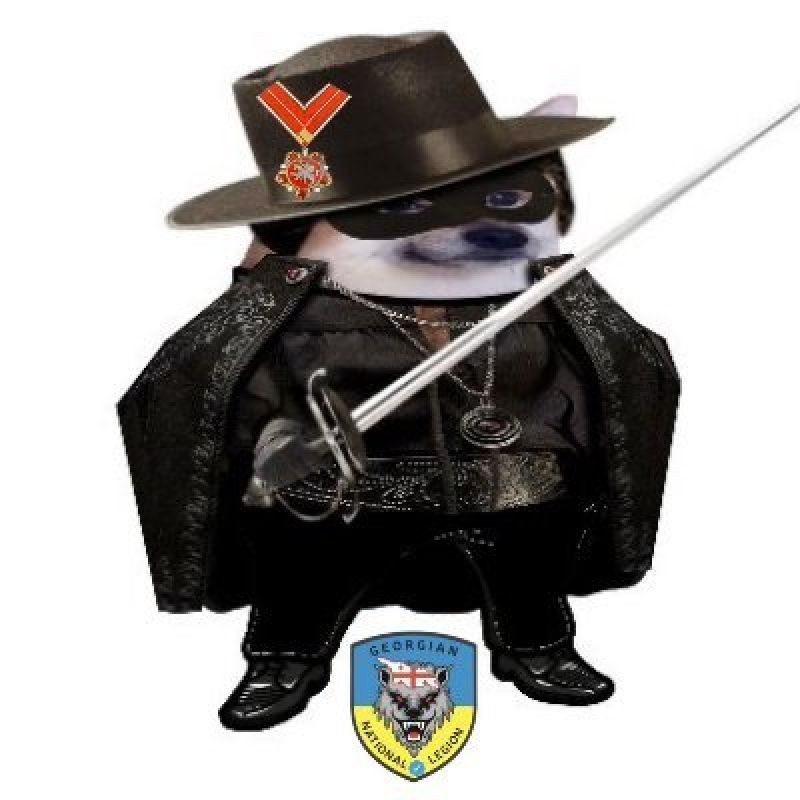
The result was the emergence of groups like NAFO—the North Atlantic Fellas Organization—a grassroots, meme-driven movement that took on Russian propagandists across social media.
Using humorous dog avatars, NAFO members mocked Russian officials, debunked disinformation, fundraised for Ukrainian causes, and provided a sense of camaraderie for pro-Ukrainian voices worldwide.
Their unofficial motto could have been: “If you see bullshit, reply with a Shiba Inu.” Despite the levity, their impact was serious. They helped shift public narratives, counter trolls, and maintain international attention.
What distinguishes Ukrainian memetic warfare from traditional propaganda, and even from Russia’s own efforts, is its decentralized nature.
Instead of state agencies manufacturing content and distributing it in a controlled manner, much of Ukraine’s meme output comes from ordinary citizens, soldiers, activists, and volunteers. Ministries and officials often amplify or institutionalize memes after they become popular, but the initial creative spark usually arises organically.
This citizen-driven approach makes Ukrainian memes more authentic and less predictable, and it taps into the cultural intuition of vast numbers of digitally native Ukrainians.
Russian information operations, by contrast, rely heavily on centralized structures such as state media, intelligence-run troll farms, and formal messaging strategies.
These methods can generate volume but often lack the cultural agility and humor that make memes effective.
The core battleground for Ukrainian meme culture is Telegram, a platform that rose to prominence because traditional news channels struggled to provide timely, reliable updates during the chaos of the invasion.
By 2023, more than 70 percent of Ukrainians relied on Telegram for news. Its design—fast, unfiltered, and visually oriented—made it the perfect incubator for memes.
Ukrainian Telegram channels formed loose networks, tagging each other, sharing content, and cultivating an ecosystem where memes about military developments, political events, or daily hardships circulated with extraordinary speed.
Western social networks like Twitter and Instagram saw a parallel memetic culture, but Telegram remained the beating heart of Ukraine’s wartime digital expression.
Yet not all Ukrainian memes were outward-facing or triumphant.
A third category identified by Syvak includes self-reflective, ironic, or even self-deprecating humor.
These memes emerged as the war dragged on and fatigue set in. For example, Ukrainian soldiers widely shared “flork” memes—simple stick-figure characters humorously performing tasks like attaching explosive reactive armor to Western vehicles in improvisational ways that only wartime necessity could explain.
Other memes criticized delays or hesitations by Western governments, especially Germany’s early reluctance to provide substantial military aid. Still others mocked political developments abroad, such as the election of Donald Trump and his subsequent attempts to insert himself into peace negotiations.
This ironic mode served as a pressure release valve for societal frustration, a safe way for citizens to voice dissatisfaction without undermining the broader war effort.
Taken together, these different forms of memetic expression reveal a picture far more complex than outsiders might assume when they hear the word “meme.” What emerges is a vibrant, participatory information ecosystem in which humor, anger, pride, fear, and hope all intermingle.
Memes become a form of civic engagement, a mechanism for collective storytelling, and a means of navigating trauma. They compress the vast emotional landscape of war into something shareable and understandable, both for Ukrainians and for global audiences.
But Syvak also cautions that memetic warfare is unpredictable.
Memes spread in ways no government can fully control.
A meme intended to mock the enemy can backfire, be misinterpreted, or be appropriated by adversaries.
Like chemical weapons drifting on the wind, viral content can sometimes do unintended damage. This is why understanding the dynamics of memetic culture is essential for modern information strategy. States cannot simply “deploy memes” the way they deploy troops.
They must understand the communities, languages, and emotional registers that make memes meaningful in the first place.
The Ukrainian experience nevertheless offers lessons for democracies everywhere.
The first is that resilience in the information environment requires empowered citizens, not just strong institutions. Ordinary Ukrainians were the first responders in the meme war, long before ministries or officials produced coherent communication strategies.
Their creativity, humor, and authenticity gave Ukraine an edge that Russia—with its rigid, authoritarian information structures—could not match.
The second lesson is that humor can be a weapon.
Not in the sense of trivializing suffering, but in the sense of affirming dignity, resisting fear, and claiming narrative space. Jokes can be shields. Satire can be a sword. When a society can laugh—even grimly—under bombardment, it signals a kind of spiritual resistance that is difficult to quantify yet deeply powerful.
The third lesson is that information warfare now extends far beyond traditional propaganda.
Memes are not a sideshow or a curiosity. They are a core component of how political meaning is made in the digital age. In the same way that artillery shapes the physical battlefield, memes now shape the informational one.
Ukraine did not choose to pioneer this new form of warfare. It was thrust upon them by the brutality of events.
Yet, by necessity, Ukrainians learned to fight not only with drones, rifles, and HIMARS, but with humor, creativity, and digital ingenuity. Syvak’s work reminds us that the future of conflict—in democracies and dictatorships alike—will depend as much on who shapes public perception as on who controls territory.
As long as wars are fought in an information environment shaped by billions of users, memes will continue to matter.
They will evolve, multiply, and mutate just as quickly as the technologies that carry them. Ukraine’s experience suggests that those who learn to wield them with agility and authenticity will hold a crucial advantage—not only in war, but in the perpetual struggle over truth, meaning, and collective memory.
Source:
Syvak, N. (2025) ‘Politics by other memes: Ukrainian memetic warfare after the Russian full-scale invasion’, Journal of Information Warfare, 24(3), pp. 65–87.